Property Teams

Property Management Security Systems for Residential and Commercial Businesses

Trusted By
nike
prada
chick fil a
hotworx
whole foods
google
dollar tree
levis
YSL
greystar
Property Management Hero
Comprehensive Physical Security

Unified Solution for Most Security Breakdowns in Day-to-Day Operations

Property management security gets harder when you manage multiple properties with separate tools, limited onsite coverage, and constant activity across the day. 

  • In residential settings, the priorities are resident safety, privacy, and convenience across entrances, amenities, guest access, and parking. 
  • In commercial properties, the focus is on protecting high-value assets, intellectual property, and business continuity without disrupting tenant operations.

Unified Operations to Drive Higher NOI

Gaps appear when access activity, video, visitor workflows, and alerts are spread across different systems. Brivo Security Suite brings access control, video surveillance, visitor management, intrusion detection into one unified platform. Property teams can improve Net Operating Income (NOI) by reducing manual follow-up, limiting unnecessary site visits, and enhancing the security of the resident or tenant experience.

How to Reduce Friction in Property Management Security

Remote oversight helps you resolve questions faster, reduce disputes, and maintain clear, audit-ready records of what happened at each location.

Vacant units and turns

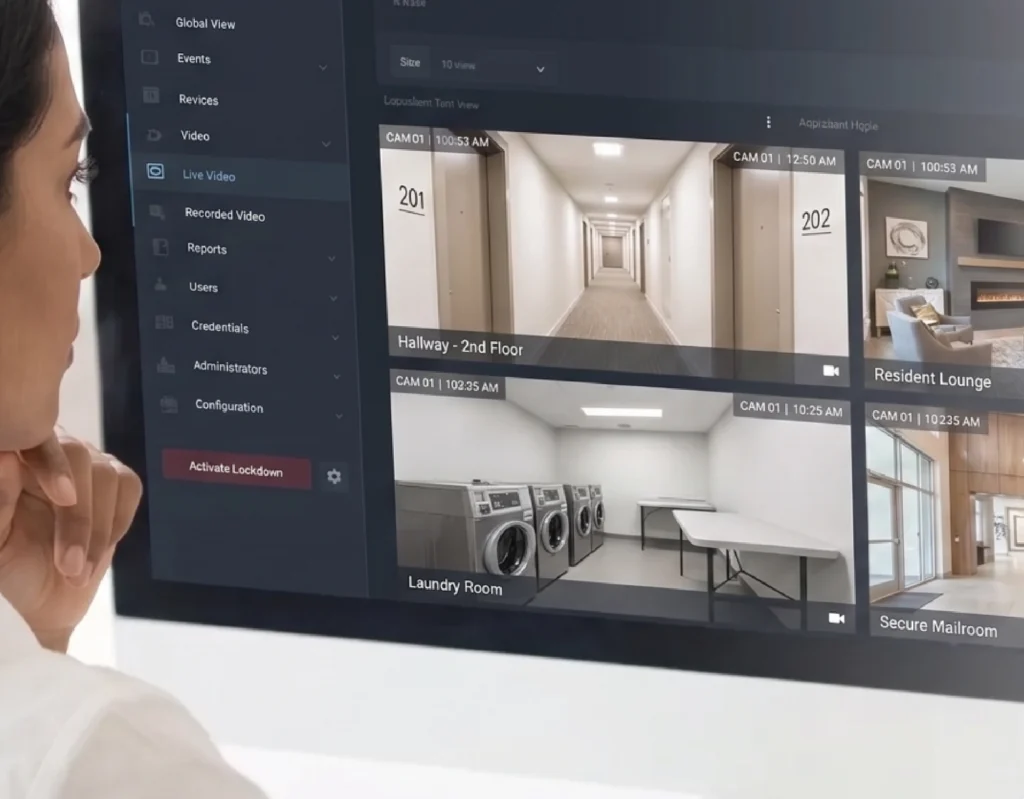
Manage move-outs and unit turns with scheduled, time-bound access for maintenance crews and cleaners. Use video to confirm entry and keep a clear digital record of door events and schedules for follow-up.

Leasing tours and guest entry

Streamline check-ins with Brivo Visitor Management, powered by Envoy, for both scheduled guests and self-guided tours. Enhance the guest experience with digital and mobile access and notifications to create an efficient, secure, and welcoming experience.

Vendors, deliveries, and packages

Set after-hours vendor access windows for delivery doors and package rooms, review related video, and track exceptions for follow-up.

middle1
Amenities and shared spaces

Apply schedules to gyms, pools, conference rooms, workspaces, and other common areas.  Having an audit trail and a video record helps managers resolve disputes and protect high-value assets such as gyms and pools after hours.

After-hours activity

Monitor after-hours activity, such as unusual loitering, alarm intrusion, or cleaning people activity.

Parking and gates

Manage vehicle and pedestrian entry with supported gate integrations, time-based permissions, and license plate credentials. Pair gate events with video and alerts, so teams can verify incidents faster and keep a clear, audit-ready record for follow-up.

Monitoring services for retailers

Brivo offers remote video monitoring for after-hours behavior and 24/7 oversight of access and intrusion events.

Parking and gates

Manage vehicle and pedestrian entry with supported gate integrations, time-based permissions, and license plate credentials. Pair gate events with video and alerts, so teams can verify incidents faster and keep a clear, audit-ready record for follow-up.

Amenities and shared spaces
Use Cases

Secure Property Management in High-Risk Areas

Brivo Security Suite brings access control, video surveillance, visitor management, intrusion detection  into a single operational view. It helps teams manage security more efficiently across locations.

Main entrances

Apply clear entry rules at primary doors and verify arrivals with linked video.

Parking and gates

Manage and automate gate access, review vehicle activity on video, and keep incident-related events easy to track.

After-hours access and monitoring

Use time-based permissions to limit late visits and confirm who entered and when. Gain 24/7 remote video monitoring with human-layered AI-driven insights and response.

Zone-based access

Schedule access to gyms, pools, and other shared spaces to align with operating hours. Set role-based MFA access to critical areas like data center rooms or storage.

Vendor windows

Set defined service windows and confirm vendor entry at the right door.

Property maintenance and damage

Visually monitor for property maintenance needs remotely.

Vacant units

Restrict access during turns and maintenance work with time-bound credentials instead of keys.

Packages and disputes

Pair package room access events with video to validate what happened and reduce back-and-forth.

Unified Physical Security

Benefits of the Brivo Security Suite for Property Management Security

Operate multiple branches or stores with consistent security and clear ownership.

Cloud-based access control
One operational view across properties

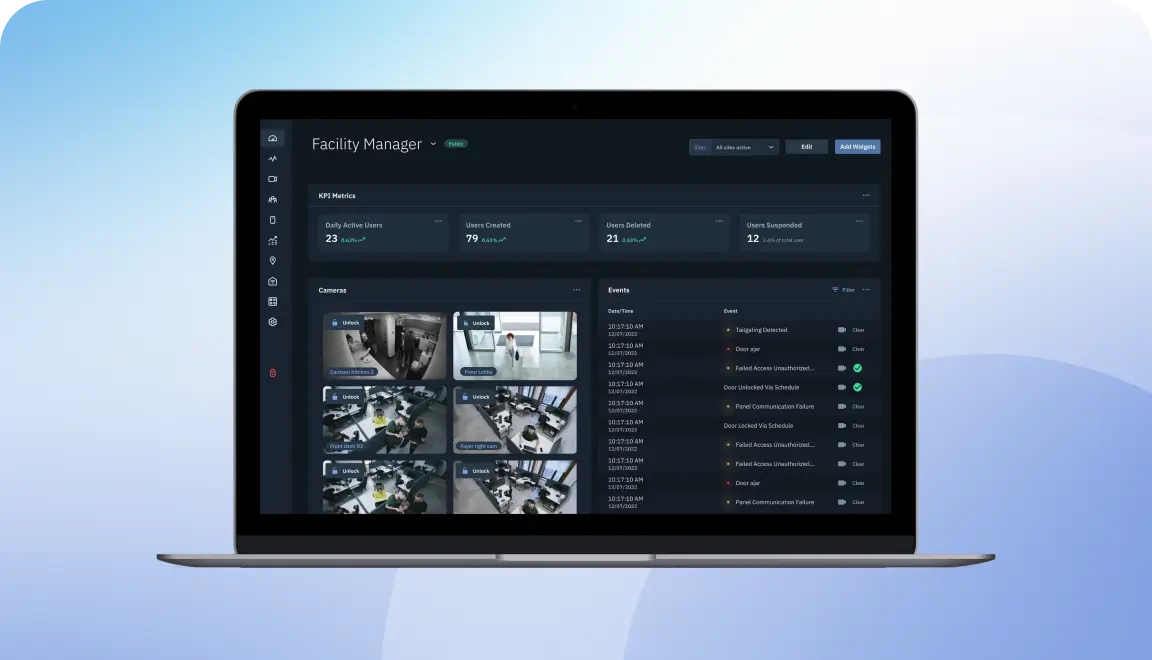
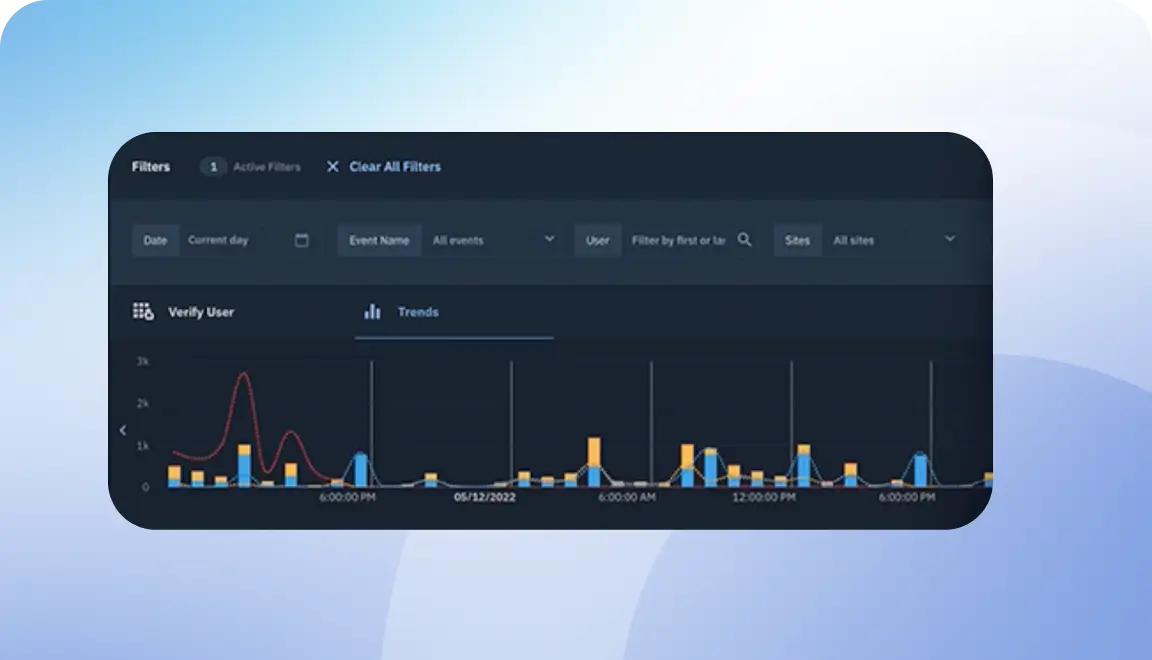
Manage access, video, intrusion, visitors, and alerts from one dashboard instead of switching between systems.

Administration
Faster follow-up and incident resolution

Review entry activity and video together, and get alerts tied to access events. Keep one clear timeline of what happened, who was involved, and what needs to happen next.

Comprehensive integrations
AI-driven visibility into risky activity

Use natural-language prompts through Brivo Genius or Eeva to create custom video alerts for the conditions that matter most at your properties, such as an unattended child at the pool, unusual after-hours activity, or crowding in sensitive spaces.

Alarm triggered for Office shown on a dark panel with a red toggle switch on; bottom bar displays 16 (megaphone icon) and 8 (alarm clock icon) as status indicators.
Better coordination during emergencies

Use 911 Camera Sharing, which is deployed to give emergency telecommunicators immediate access to selected cameras, helping first responders arrive with better context.

Centralized
Centralized control across locations

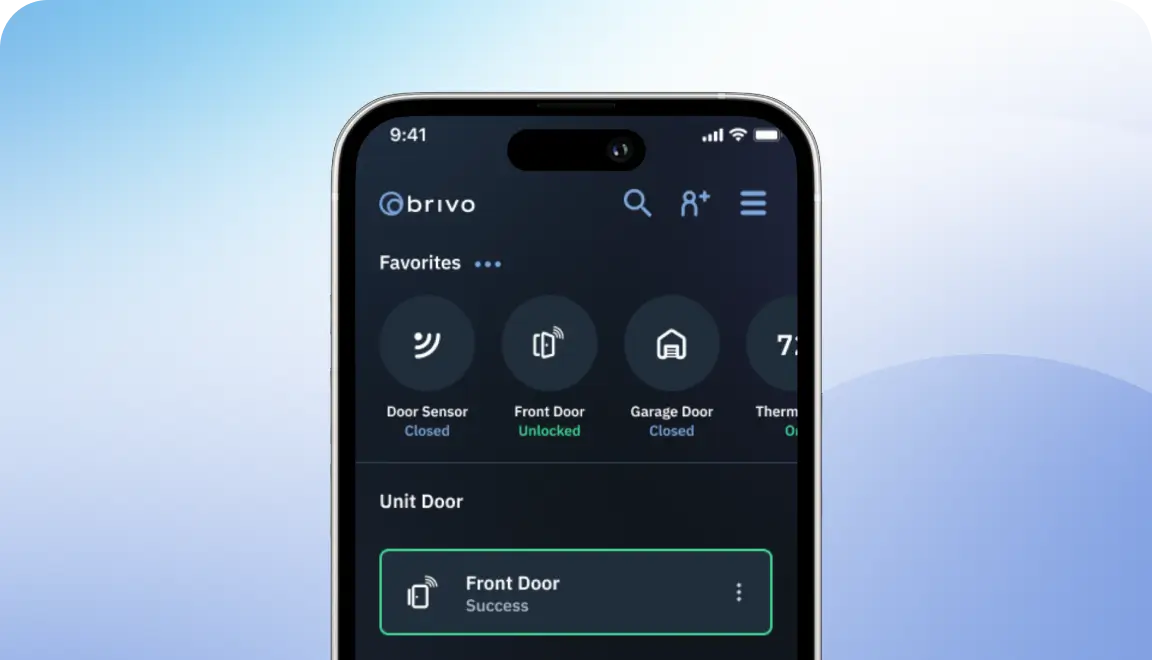
Manage doors, cameras, gates, and shared spaces from one system, with remote actions available from web or mobile.

Brivo and Your Property Technology Stack

Brivo is a core part of the modern property technology stack, helping you manage security and access control alongside the systems you already use with the Brivo integrations.

Establish uniform access policies, ensure centralized oversight of all sites with access events and visual analytics, and maintain clear incident tracking across distributed properties to enhance security for commercial properties at scale.

A dispersed property team can standardize access rules across all locations and review entry events and incidents from a single dashboard, eliminating unnecessary site visits. Explore how Brivo helps property teams streamline security operations across their portfolios.

Guesty
google
envoy
hotworx
mindbody
parkable
okta
levis
Officernd
park-stash
ripple
RP
sharry
sentryai
swiftlane
torus
telaeris
Allegion
2n
LMPM
iotas
livly
Lorem Ipsum

Quick and Effective Management of Remote Access

Remote Access allows your dealer or Brivo Support to sign in to your Brivo Security Suite account to assist with configuration and troubleshooting. You can use it as needed to accelerate support for stores, warehouses, and distribution centers, then turn it off. You decide if and when it’s available, and authorized admins can toggle it on or off.

Learn more about managing remote access in Brivo Security Suite.

Secure Property Management With the Brivo Security Suite

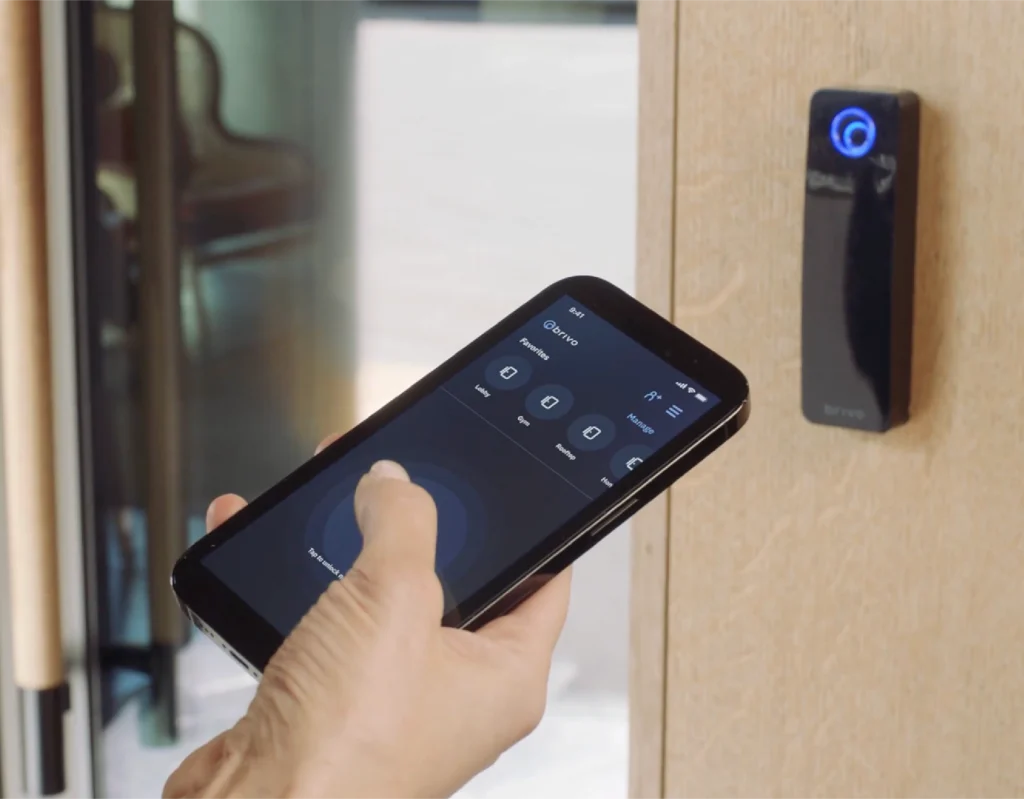
Brivo supports daily operations with remote oversight, so your team can manage access, monitor activity, get timely alerts, and respond faster without being on-site. You can issue Brivo Mobile Pass credentials or support mobile access through a PropTech or identity partner integration, while still keeping event and user activity logs in one place.

Brivo Eagle Eye Video adds cloud video and AI-powered analytics for stronger security, with an option for a 24/7 remote video monitoring service to augment your staffing.

Common Questions About Property Management Security

More questions?

What is the difference between cloud-based security and legacy property management security?

Cloud-based access control for properties helps you manage doors and credentials, with permissions and schedules that are easier to update remotely than legacy on-site systems. Access control is one piece, but adding video analytics and history, workflows, and reporting provides real-time alerts and helps you verify what happened and document follow-up across locations. Cloud solutions easily scale as you expand and are more compatible with innovative AI. 

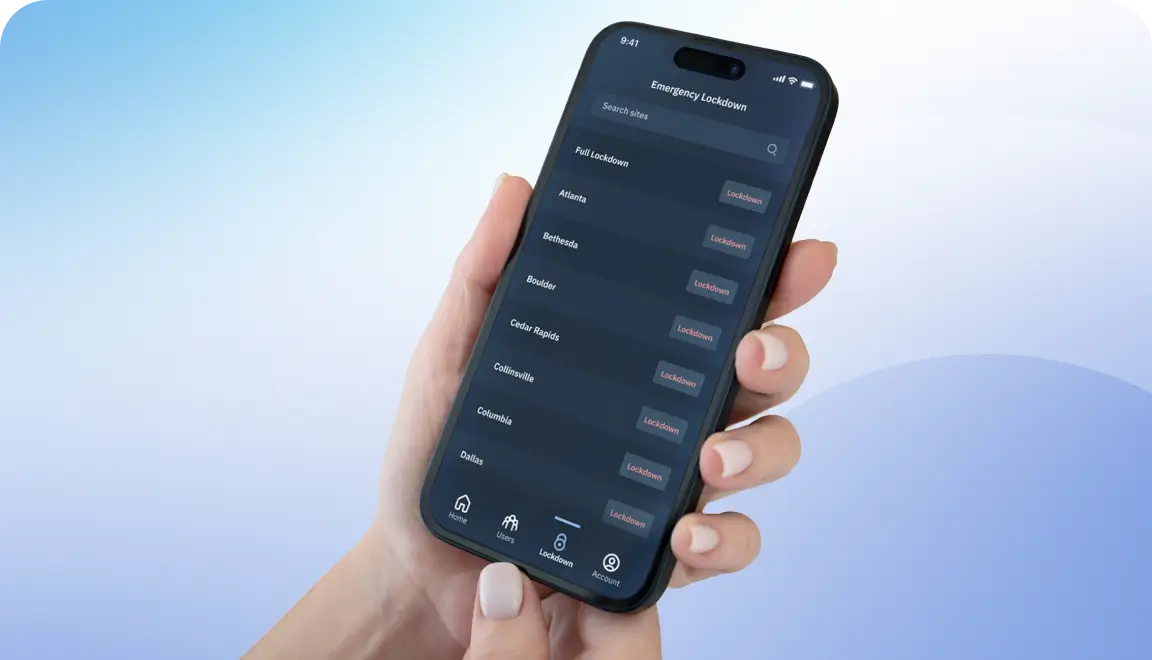
In addition, video analytics can identify and alert you to unusual events such as loitering, gun detection, or illegal dumping. Cloud-based security brings access, video, intrusion, visitor, and incident management all in one suite, versus a fragmented system requiring multiple logins. By combining these solutions, property managers can be proactively alerted to risky events, such as a gun on the premises, and activate a lockdown.

Where should property managers prioritize security coverage first?

Start where disputes, safety concerns, and after-hours activity concentrate: main entrances and lobbies, package rooms, parking and gates, and high-traffic amenities. Add coverage at service entrances, loading areas, and staff-only spaces where vendors or deliveries come through. If intrusion alarms or monitoring are part of your program, prioritize zones that should never be active after hours.

How do you manage vendors after hours without sharing keys or codes?

Use time-bound access windows tied to specific entrances, and pair entry with video at the door so teams can confirm arrival and departure without guesswork. Visitor workflows can also document who was expected on-site, when, and who approved the visit. Alerts for door-held or forced-open events help surface exceptions quickly.

How do audit logs help with incidents and residents' or tenants' concerns?

Strong incident documentation is more than door activity. A useful record includes entry history, visitor records (when used), alarm events, and the related video clip references so you can build a clear timeline. Incident management should have a collaborative workflow so teams can work together. That makes it easier to resolve package disputes, investigate after-hours issues, and share evidence with leadership or third parties when needed.