
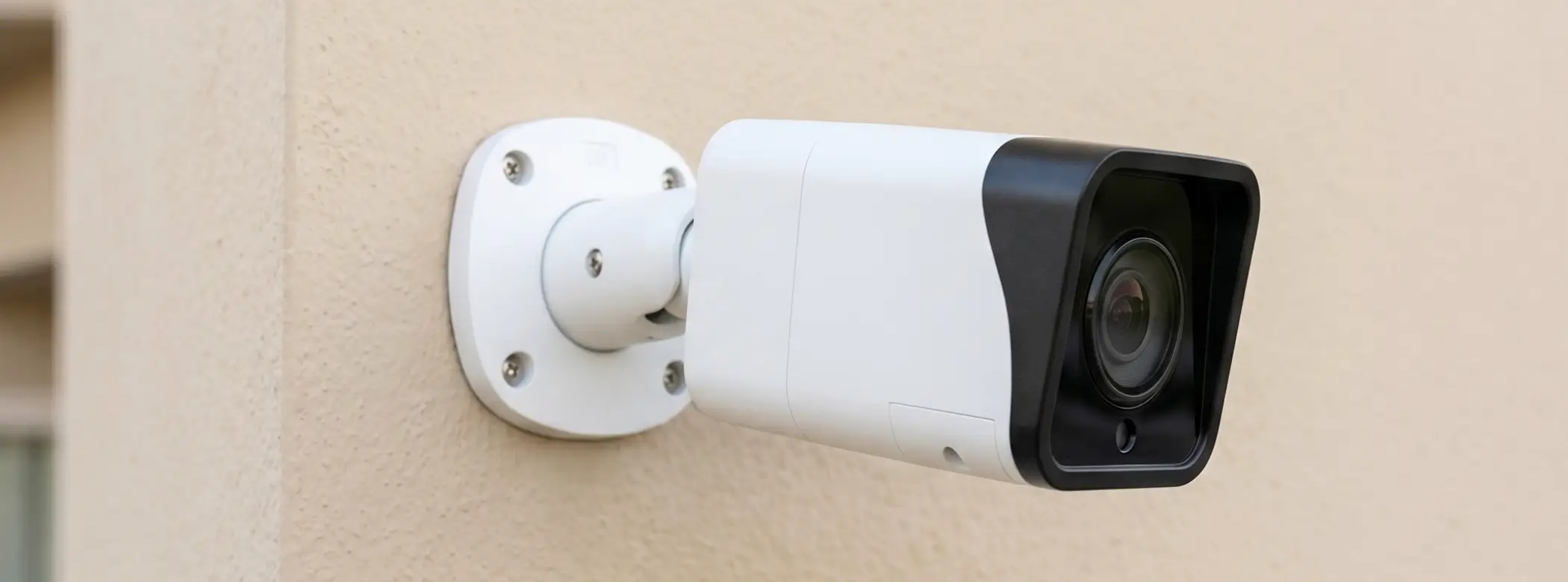
Direct-to-cloud surveillance started as a solution for the smallest sites. Three years of releases later, that framing is outdated.
When Eagle Eye Networks (now Brivo) launched Camera Direct Complete in April 2023, the pitch was clear and deliberately narrow. Connect a camera straight to the Eagle Eye Cloud VMS (now Brivo Eagle Eye Video), skip the on-site bridge, and roll the hardware into the subscription so a customer’s upfront cost approached zero. Integrators who tested it early described the fit the same way: ideal for customers with four or fewer cameras per site. « The installation is painless, » said Brian Hampton of Vigilant Technology at launch. « Within five minutes the camera is online, and we’re good to go. »
That five-minute install is still true. The four-camera framing is not.
If your mental model of Camera Direct was formed in 2023, it is missing three years of engineering, and most of what has changed addresses the exact constraint that made the product small-site-only in the first place.
The Original Constraint, and Why It Existed
In a traditional deployment, the on-site bridge does more than record. It shapes bandwidth. It buffers, transcodes, and meters what actually leaves the building, so twenty cameras at a site do not translate into twenty full-resolution streams fighting over one uplink.
Remove the bridge, and that shaping goes away. In Camera Direct’s original design, each camera opened its own encrypted outbound connection and streamed full resolution continuously. Excellent for simplicity: nothing on site to fail, nothing to configure, no inbound firewall rules. But the arithmetic capped the deployment. A handful of 1080p streams at typical bitrates will saturate the modest upload link at a retail strip or a satellite office. Hence « four or fewer, » later relaxed to six.
The constraint was never really about cameras. It was about bandwidth. Once you see it that way, the fix becomes obvious.
Low-Bandwidth Mode Changed the Math
Camera Direct now offers a low-bandwidth streaming mode that inverts the original design. Instead of pushing full resolution up the pipe around the clock, the camera continuously sends a lightweight low-resolution stream plus an event metadata channel. Steady-state upload drops by up to roughly 70%, depending on resolution and fps.
Full-resolution video has not gone anywhere. The camera records it locally to its SD card 24/7. When an event fires from on-camera analytics or cloud-side detection, the cloud requests the full-resolution stream for that window, and backfills the brief gap between the event and the stream’s arrival from the SD card. The result is complete full-resolution coverage of everything that matters, without paying for full resolution during the many hours when nothing happens.
The practical consequence: camera count is no longer the limit. Available upload bandwidth is. Size a site by its uplink rather than a rule of thumb, and Camera Direct comfortably supports around 40 cameras per location as a working indication. It also makes deployments viable that were previously off the table entirely: LTE-connected sites, DSL, shared building uplinks, anywhere the network was the reason you reached for an appliance.
The Camera List Opened Up
At launch, Camera Direct meant Eagle Eye cameras. Today it is a genuinely open platform:
- Brivo Eagle Eye cameras: dome, turret, and bullet, including Pro series.
- Axis cameras running Axis OS 12.0 or higher, onboarded through Axis Cloud Connect
- i-PRO 15 U-series models, supported by installing the direct-to-cloud app on the camera
For an integrator, this matters more than it sounds. Direct-to-cloud is no longer a reason to change your preferred camera line, and it no longer confines you to a single vendor’s roadmap.
Intelligence Moved Onto Every Camera
The other 2023 assumption worth retiring: that removing the bridge meant giving up analytics. bridge-run analytics did go away. Everything else got better.

Brivo Eagle Eye LPR runs license plate recognition entirely in the cloud and works on every Camera Direct camera — no LPR appliance, no dedicated hardware at the site. This is the clearest example of the pattern: a capability that used to require a box on site is now just a cloud feature, which means it arrives everywhere at once.
Edge analytics run person and vehicle detection directly on Axis and Brivo Eagle Eye Pro series cameras. On Axis, this is AXIS Object Analytics included at no additional cost. The camera does the first pass and forwards only meaningful events, which cuts bandwidth and hands the cloud a pre-filtered signal to work with.
Eeva, the prompt-based AI video agent, sits on top of it all. Rather than configuring a fixed detector, you describe in plain language what you want watched; a person in the warehouse without a hard hat, a spill on the floor, an empty shelf; and Eeva builds the detection logic and monitors continuously. It is cloud-side and camera-agnostic, so it works on Camera Direct exactly as it works anywhere else in the platform.
Together, these cover both halves of the problem: cheap, accurate filtering at the edge, and flexible reasoning in the cloud.
Cameras Can Now Respond, Not Just Record
Detection is only useful if something happens next. Camera Direct supports automated event responses through the Automation feature to pair a trigger with an action:
- A person is detected after hours → activate the camera’s output port to fire a siren or strobe
- A vehicle enters a restricted area → play a pre-recorded spoken warning through the camera
At an unstaffed site, that is the difference between reviewing an incident tomorrow morning and preventing it tonight. No operator, no monitoring center, no on-site hardware beyond the camera.
Manage the Camera From Anywhere
Tunnel to Camera provides remote access to a camera’s own web interface through the cloud — no local network, no VPN, no site visit. Configure edge analytics, adjust video settings, troubleshoot a stream, all from wherever you are, on any Camera Direct camera.
For a multi-site portfolio, this is quietly one of the largest operational changes on this list. Camera configuration used to be a truck roll.

What Did Not Change
It’s worth mentioning what has stayed the same, since these are the reasons Camera Direct existed in the first place:
- No on-site recording hardware. No bridge, no NVR, nothing to fail in a closet.
- Outbound-only connections. The camera initiates every connection. No inbound ports, no port forwarding, no VPN, which removes the most common IP camera attack vector.
- Encrypted end to end, in transit, in storage, and in playback.
- Same Cloud VMS. Camera Direct is not a separate product with a separate interface. Certified technicians need no new training, and the cameras appear in the standard dashboard alongside bridge-connected ones. The two can coexist in the same account.
- Outage resilience. The SD card keeps recording through an internet failure and back-fills to the cloud on reconnection.
- Complete’s commercial model. Camera Direct Complete still bundles hardware and software into a single subscription with no upfront equipment cost, Lifetime Repair and Replace for the duration of the subscription, HD video, and 60 days of cloud retention. Still monthly, annual, or multi-year. Still the RMR story integrators liked in 2023.
The limitations of 2023 are gone. If you haven’t explored Camera Direct recently, you’re looking at a different product entirely. Reach out to our sales or support teams today to see how the new Camera Direct can scale across your portfolio.