






Unified Physical Security
Intrusion Detection For Modern, Connected Security
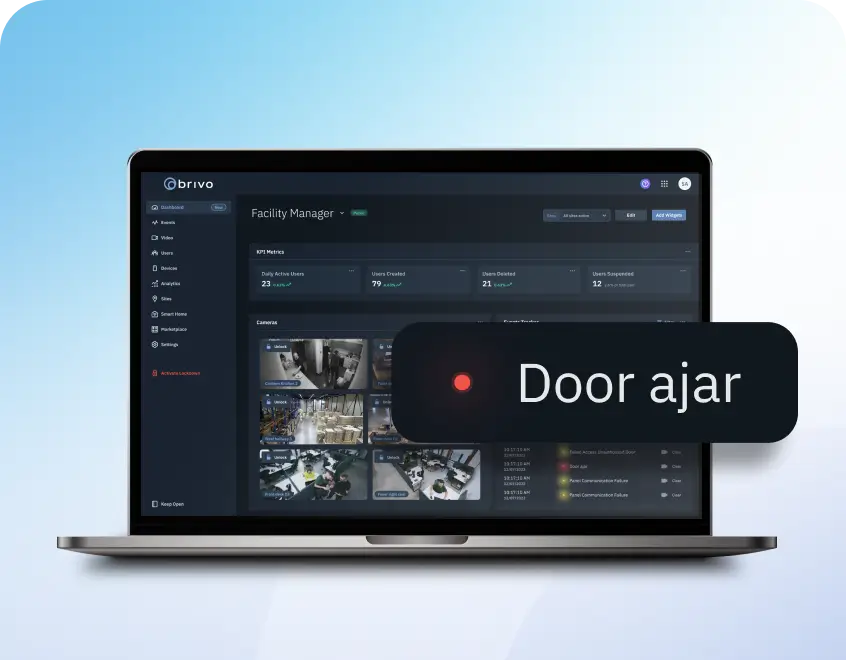
Intrusion detection systems work best when alarms are integrated with the rest of your security program. Brivo Security Suite brings intrusion detection, access events, and video context into a single operational view. This unified approach enables teams to validate incidents and respond with less guesswork.
With video-verified alarms and optional monitoring services, you can reduce false alarms, detect intrusions earlier, and follow response workflows consistently across locations, even after hours.
Benefits
How Brivo Intrusion Detection Protects Your Business
Manage access for all your locations remotely and in a unified manner. Cloud management means you don’t need to be on-site to keep your buildings secure or to grant immediate access to your visitors.
Be the team that runs every site with confidence — see activity across your locations and respond immediately
Centralized monitoring across locations
Monitor intrusion activity across sites in a single place, rather than juggling panels and portals. Standardize arming schedules, contacts, and escalation paths, so every location follows the same playbook.
Reduced operational noise
See intrusion alerts alongside door activity and, where deployed, video surveillance — all integrated with your Brivo Security Suite. That added context helps cut false-alarm disruptions and keeps attention on what needs follow-up.
Faster alarm validation and response
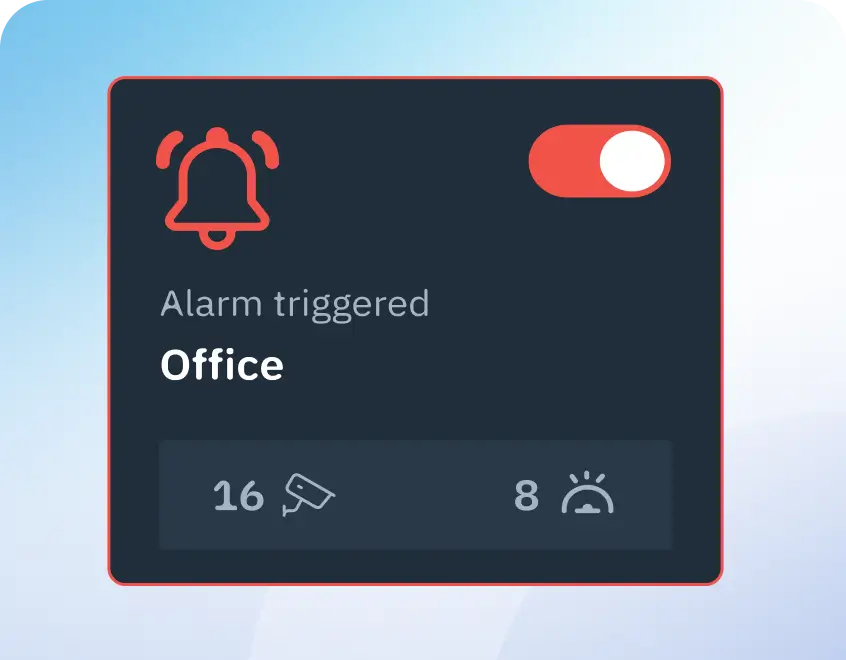
When an intrusion detection alarm triggers, connected access events and video help you quickly confirm the situation. For smaller teams, optional 24/7 monitoring services can help ensure critical events are reviewed and escalated after hours.
Consistent processes for security operations
Use the same workflows for alarms, after-hours activity, and exceptions across locations. Consistency makes training easier and improves reporting
Role-based control, accountability, and anomaly detection
Control who can arm or disarm, acknowledge alarms, change settings, or export records with role-based permissions. Where available, AI-assisted anomaly detection can help flag unusual activity patterns for review, thereby verifying and adding more context to the alarm events without manual intervention.
Recognized for Excellence
Features
Capabilities That Improve Intrusion Operations
Mobile credentials let people use their phones and watches to open doors without the hassles of printing, reissuing, and managing physical badges. You can also issue digital wallet credentials and support tap-to-enter experiences that scale across locations.
Brivo Unified Credential works with many supported readers and locks to simplify rollout and administration, making access more consistent for users and easier for admins to manage.
Centralized configuration and oversight
Configure sites within a single administrative layer, then apply repeatable settings to new locations as you grow. This supports standardization without forcing a full redesign every time you add coverage.
Alarm visibility with actionable context
View alarms with the supporting details teams need to decide next steps. Pairing alarms with identities, door events, anomalies, and video surveillance reduces investigation time.
Multi-user operations support
Support different responsibilities across security, facilities, and IT with segmented access and clear ownership. Intrusion detection is available only to those who require it. Operators can work from the same system while keeping administrative actions controlled.
Flexible workflows that match real teams
Maintain records of alarm activity and administrative changes for internal reviews, and audit requests without manual reconstruction. Set response steps that fit how your teams work, like remote arm/disarm and alert routing.
Operational workflows that match real teams
Set response steps that fit how your teams work across shifts and locations. Remote arm or disarm and consistent alert routing help reduce late-night scrambling.
Support modern reader standards
Use bluetooth and NFC readers, as well as mobile wallets.
Centralized Management
Scalable Intrusion for Multi-Site and Multi-Team Organizations
As your organization adds operators, vendors, or departments, role-based access helps keep control clean. You can give each team the access they need to acknowledge alarms or manage specific sites, while limiting who can change configurations or export records.
Facilities change over time. When you remodel, expand a footprint, or take on a new tenant space, you can adjust coverage, zones, and schedules without reworking your entire operating model, helping you maintain continuity during transitions..
If you manage different environments, such as offices, warehouses, and retail sites, you can run a single program with consistent oversight. This same model also maps well to distributed environments, such as campus security, and to regulated industries, such as healthcare security environments.
“Our residents appreciate the mobile-first solution and our employees find the self-service solution allows them to spend more time focusing on delivering great resident experiences.”
“The Brivo system makes my job easier and frees me up for other things. With Brivo, it’s easy to find out what we need; the system doesn’t lie. It’s very easy to manage and we can focus our time on providing quality care to our patients.”
“All of our call centers and distribution centers use Brivo today. We've been able to run a highly efficient operation by having the security team able to focus on their core responsibilities instead of managing a database.”
“Out of all of the security proposals we saw, Brivo’s cloud-based access control solution was a no-brainer. It’s intuitive to use and gets the job done well.”
Ecosystem
Integrations That Strengthen Intrusion Response
Access control and door events
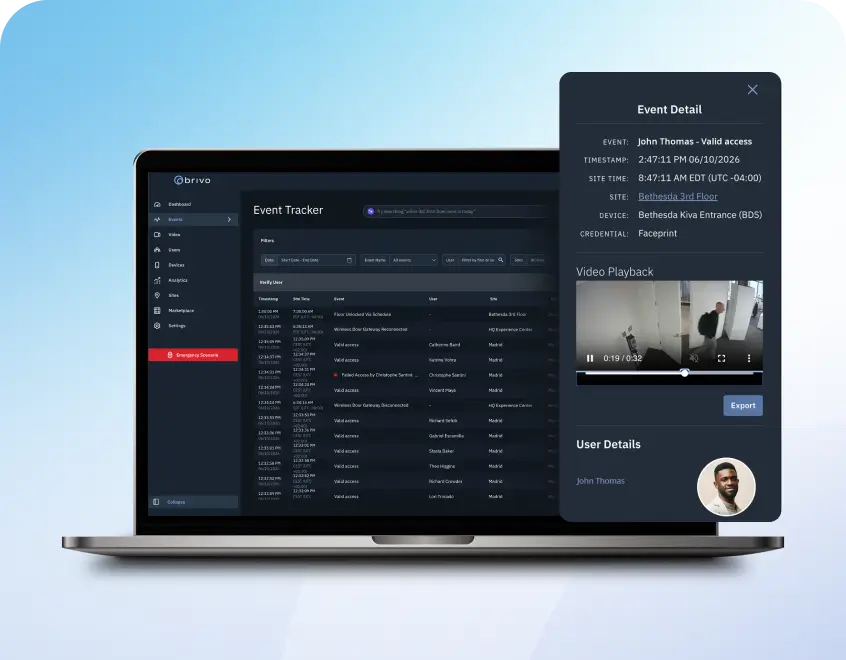
Intrusion response improves when you can reference entry activity and identities in the same view. When alarms connect to access control systems, door events can add context around who was where and when.
Video for visual verification
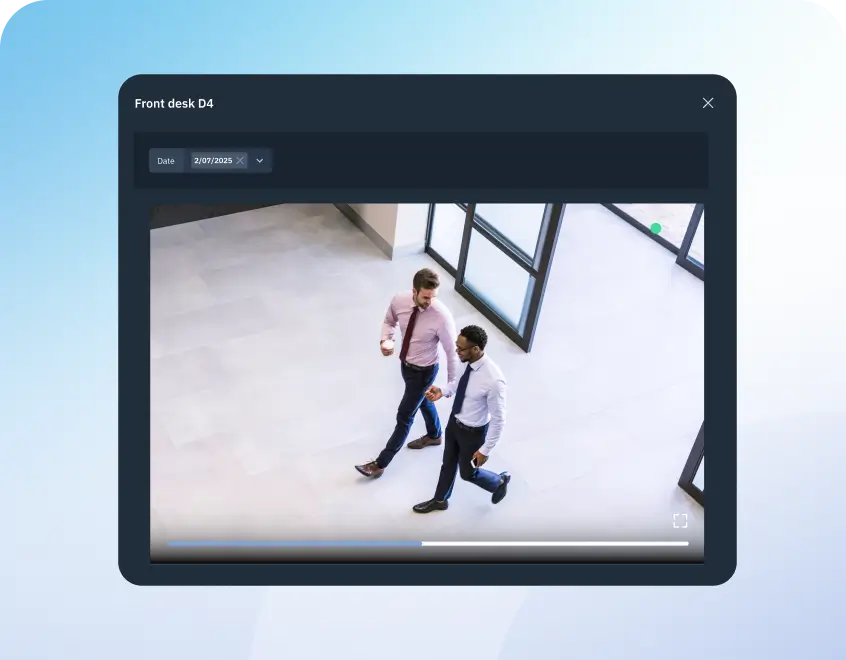
Video context helps teams confirm what happened before escalating or dispatching. With integrated video and AI-assisted capabilities where deployed, operators can validate alarms faster and document outcomes more clearly.
Identity and user management
Tie intrusion activity back to the identity and access context. See who was onsite, who used the system, and what door activity occurred. This helps identify unauthorized attempts and supports faster, more confident responses.
Security operations workflows
Bring alarm events into incident workflows so teams can document, investigate, and attach evidence in one place. Add 24/7 Monitoring for added escalation support, or connect other systems and standardize response across locations.
Bring Brivo Intrusion Detection To Your Organization
Elevate your intrusion detection: run it as part of a connected security program, not a separate console. You get centralized oversight, faster validation with access and video context, and a cleaner way to standardize response across sites.
To evaluate fit for your locations, talk with a Brivo expert about your current alarm setup, monitoring needs, and integration priorities. From there, you can scope a rollout plan that supports growth and keeps governance clear.
What is intrusion detection, and how does it support commercial security operations?
Intrusion detection is part of your security program that monitors for unauthorized and risky activity. It triggers alarms when suspicious activity is detected, such as a forced door or motion after hours.
In commercial environments, intrusion detection works best when integrated with response workflows. It enables teams to validate what happened and act quickly, either on a single site or across multiple sites.
How does intrusion detection differ from intrusion prevention?
Intrusion detection focuses on identifying and alerting your team to suspicious activity as it occurs. Intrusion prevention is what you put in place to reduce risk in the first place, such as locked doors, controlled entry, and policies that limit access based on role and schedule.
In practice, most organizations use both: prevention to reduce opportunities and detection to catch what gets through.
Can intrusion detection scale across multiple locations with different site needs?
Yes, if the system supports centralized administration with site-level flexibility. You should be able to standardize core settings and escalation paths, then tailor arming schedules, zones, and contacts by location based on each site's operating model.
A cloud-managed approach also makes it easier to bring new sites online without changing how teams monitor and respond.
How does Brivo connect intrusion detection with access control and video?
Brivo can display alarm events alongside access control system activity and video context from an integrated security platform, Brivo Security Suite. It enables operators to confirm what happened and proceed directly to response or documentation.
What should businesses look for in an intrusion detection solution?
In addition to a system that integrates with unified security options so alarms, access and video don’t reside in separate tools, look for a system that:
- Reduces false-alarm disruption by adding context.
- Supports role-based permissions for day-to-day operations.
- Keeps clean records for investigations and audits.
Additionally, it should align with your organization’s compliance and standards expectations.